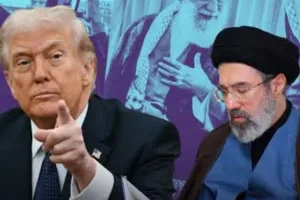
‘Perturbed’ with Netanyahu, Trump says he wants to meet Iranian Supreme Leader Ayatollah Mojtaba Khamenei
Trump said that he was "perturbed" at Netanyahu's military escalation in Lebanon.
Pretoria says Washington warned of a boycott, leading France to withdraw its G7 invite. The move reflects deeper tensions over Israel, trade disputes, and race-related policies.




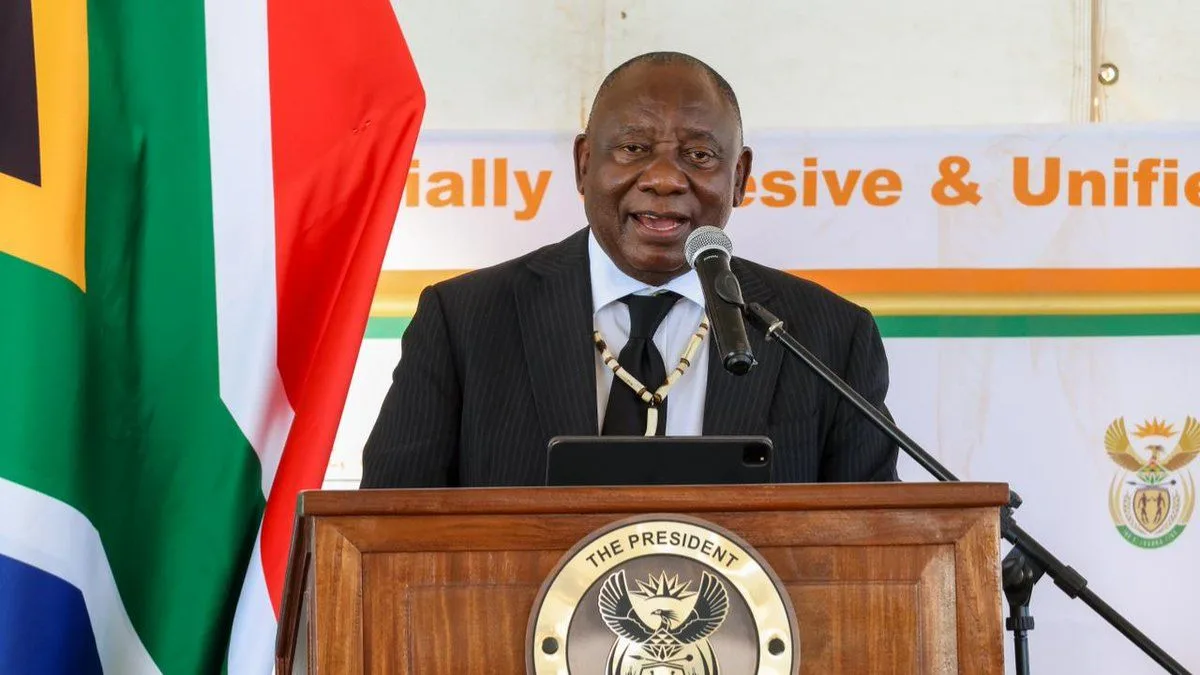
South African President Cyril Ramaphosa speaks at an official event. Pretoria says the US pressured France to withdraw its G7 invitation. (Photo: X/@PresidencyZA)
The United States pushed France to withdraw its invitation to South African President Cyril Ramaphosa for the upcoming G7 summit in Evian this June, according to South Africa’s presidency.
Speaking to AFP, presidential spokesperson Vincent Magwenya said France acted after sustained pressure from Washington, which had warned it could boycott the summit if South Africa attended.
Advertisement
It shows the gap between Washington and Pretoria is only getting wider. Differences over foreign policy, trade and race issues have been piling up for months, and now they are starting to spill over into global forums like the G7.
Advertisement
Magwenya said Pretoria was informed that the US made its position clear to France, leaving little room for negotiation.
He confirmed that South Africa will not be participating in the G7 meeting.
The G7, made up of major industrialised nations, often invites additional countries to take part in discussions. South Africa had earlier been included in such outreach meetings, including the 2025 summit hosted by Canada.
Relations between the two countries have been strained since last year. US President Donald Trump has repeatedly criticised South Africa’s policies, including its efforts to address racial inequality, which he has described as unfair to white citizens.
Trump had also imposed steep tariffs on South African exports, though the US Supreme Court later overturned that policy. He has further accused the South African government of failing to protect white Afrikaners, a claim widely disputed.
Another major point of friction has been South Africa’s decision to take Israel to the International Court of Justice over alleged genocide in Gaza, a move that has not gone down well in Washington.
Diplomatic ties took another hit when the US skipped the G20 summit held in Johannesburg last year. South Africa has since found itself sidelined from some G20-related processes, with the US currently holding the group’s rotating presidency.’
Despite the latest setback, Pretoria said its ties with France remain unaffected. Magwenya also stressed that South Africa wants to keep engaging with the United States, noting that relations between the two countries go beyond any one administration.
Tensions have also surfaced on the diplomatic front. Earlier this month, South Africa called in the new US ambassador after he made remarks critical of the country’s racial policies and legal rulings.
In his first public speech, envoy Brent Bozell described the chant “Kill the Boer, kill the farmer” as hate speech and questioned policies aimed at empowering Black South Africans.
South African courts, however, have ruled that the chant must be understood in its historical context and does not qualify as hate speech.
The ambassador later clarified that the US respects South Africa’s judicial system.
Relations had already been strained after Washington expelled South Africa’s ambassador, Ebrahim Rasool, last year following his criticism of Trump’s Make America Great Again (MAGA) movement.
Pretoria is yet to appoint a replacement, though Magwenya said the process is nearing completion.
Advertisement